How Many Solar Panels Do I Need?
Most UK homes need between 8 and 12 solar panels, creating a system of around 3.5kWp to 5kWp. A typical three-bedroom house using 2,500 to 3,500kWh of electricity a year usually suits 9 or 10 modern panels. The right number for your home depends on three things: 1. How much electricity you use 2. How much of it you can use during daylight 3. How much suitable roof space you have. Plans for an electric car or heat pump can also justify a larger system. This guide shows typical system sizes by household, a simple way to work out your own number and the factors that limit how many panels you can fit. ## How many solar panels does a typical UK home need?  A sensible starting point is a system that generates roughly what your home uses in a year. On a well-sited UK roof, each kWp of panels produces about 850 to 950kWh annually, so annual use divided by 900 gives a rough system size in kWp.Household
Annual electricity use
System size
Panels (430W)
1-2 bedrooms, low use
1,500-2,500kWh
2.5-3.5kWp
6-8
2-3 bedrooms, typical use
2,500-3,500kWh
3.5-4.5kWp
8-10
3-4 bedrooms, higher use
3,500-4,500kWh
4.5-5.5kWp
10-13
4+ bedrooms or an EV
4,500-6,000kWh
5.5-7kWp
13-16
EV and heat pump
7,000kWh+
7kWp+, if the roof allows
16+
*Ofgem now uses* [ * 2,500kWh a year * ](https://www.ofgem.gov.uk/sites/default/files/2026-06/Summary-of-changes-to-energy-price-cap-1-July-to-30-September-2026-revised-TDCV.pdf) *as typical electricity use for a medium household. The* [ * Energy Saving Trust * ](https://energysavingtrust.org.uk/) *puts the average domestic system at about 4.5kWp, typically 12 panels. These ranges are a guide, not a quote. Bedroom count is only a rough proxy, and your actual usage matters far more.* ## How to work out how many panels you need You can get a reliable estimate in three steps. 1. **Find your annual electricity use.** Check the kWh total on your last 12 months of bills or in your supplier's app. Use a full year, because winter and summer use can differ a lot. 2. **Convert it into a system size.** Divide your annual use by the output you can expect per kWp. Around 900kWh suits much of England and Wales, while 800kWh is more realistic for Scotland or a partly shaded roof. 3. **Divide by the panel wattage.** Most domestic panels are now 400W to 450W, or 0.4kW to 0.45kW each. Knowing how much you can [ save on your electricity bill each month ](https://gosolartoday.co.uk/articles/how-much-money-can-solar-panels-save-each-month) depends as much on when you use power as on how many panels you install. ## How much roof space do you need? A typical modern panel measures roughly 1.7m by 1.1m, so each one takes up about 2m² of roof. The [ Energy Saving Trust ](https://energysavingtrust.org.uk/) says a 4.5kWp system typically covers 20-30m², allowing for gaps around the edges and between rows. In practice, roof space often decides the final number rather than your electricity use. Chimneys, rooflights, vents and dormers break up the usable area, and installers must leave clearance at the roof edges. A south-facing roof gives the best output per panel, while an east-west split can fit more panels across two roof faces and spread generation through the day. ### Does panel wattage matter? Higher-wattage panels let you fit a bigger system on a smaller roof. Ten 450W panels make a 4.5kWp system, whereas you would need eleven or twelve 400W panels for roughly the same size. If your roof is tight, higher-output panels are usually worth the small premium. If it is large and unshaded, standard panels may offer better value, which you can see when comparing [ solar panel costs ](https://gosolartoday.co.uk/articles/how-much-do-solar-panels-cost) per kWp across quotes. 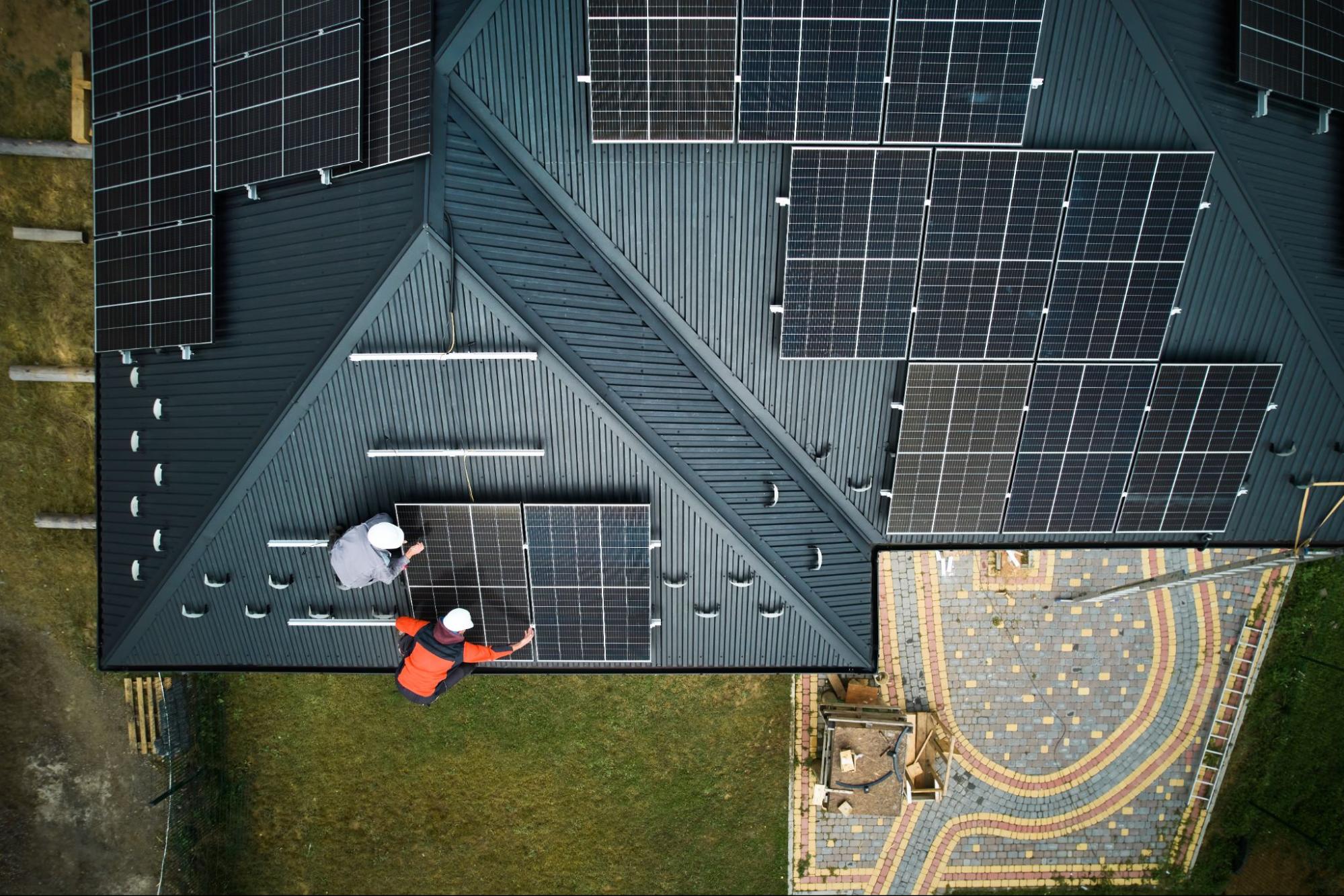 ### Grid connection limits System size also affects the paperwork. Under connection rules set by the [ Energy Networks Association ](https://www.energynetworks.org/) , a home on a standard single-phase supply can usually connect a system with an inverter of up to 3.68kW (16 amps) and notify the local Distribution Network Operator (DNO) afterwards. Above that, your installer normally needs DNO approval before the system is switched on. This rarely stops a larger system. Many installers fit more panels than the inverter limit and use an export limiter, or apply for approval in advance. It can add a few weeks to the timeline, so ask your installer which route applies. ## When it makes sense to fit more panels Sizing to today's usage is the safe default, but a few situations justify going larger.  An electric car can add around 2,000kWh or more a year to a household's demand, depending on mileage. Solar covers that best if the car is often at home in daylight, so a larger array suits people who work from home or have a second car that stays parked. A heat pump adds several thousand kWh, but most of it is used in winter when solar output is lowest. Extra panels will help with hot water and spring and autumn heating rather than the coldest months. A [ solar battery ](https://gosolartoday.co.uk/articles/solar-batteries-the-complete-uk-guide) changes the sums, too. Without storage, extra panels mainly mean extra export, which earns around 12p per kWh under a typical Smart Export Guarantee tariff, according to the Energy Saving Trust. Electricity bought from the grid costs 26.32p per kWh under Ofgem's [ October to December 2026 price cap ](https://www.ofgem.gov.uk/information-consumers/energy-advice-households/energy-price-cap-unit-rates-and-standing-charges) . With a battery, more of the surplus can replace those imports, so a larger array is easier to justify. Factor in [ how much solar panels with a battery cost ](https://gosolartoday.co.uk/articles/how-much-do-solar-panels-with-a-battery-cost-in-the-uk) before deciding. If you expect to add an EV or heat pump within a few years, it is usually cheaper to install the extra panels now, while the scaffolding is up, than to add them later. Just check the larger system still gives a sensible [ solar panel payback period ](https://gosolartoday.co.uk/articles/solar-panel-payback-period) on today's usage. ## So, how many solar panels do you need? For most UK homes, the answer is 8 to 12 panels. Start with your annual electricity use, divide by about 900 to get a system size in kWp, then check how many panels your roof can fit. Allow for any plans to add an EV, heat pump or battery. An installer's survey will confirm the final layout. Use the our [ savings calculator ](https://gosolartoday.co.uk/) for an indicative system size and saving, then compare quotes from up to four vetted, MCS-certified installers covering your postcode.